Cozy Cabin Kitchen Design: A Complete Guide to Rustic Charm
I’ve spent years designing and styling cabin kitchens, and I’m excited to share my insider tips for creating that perfect rustic retreat.

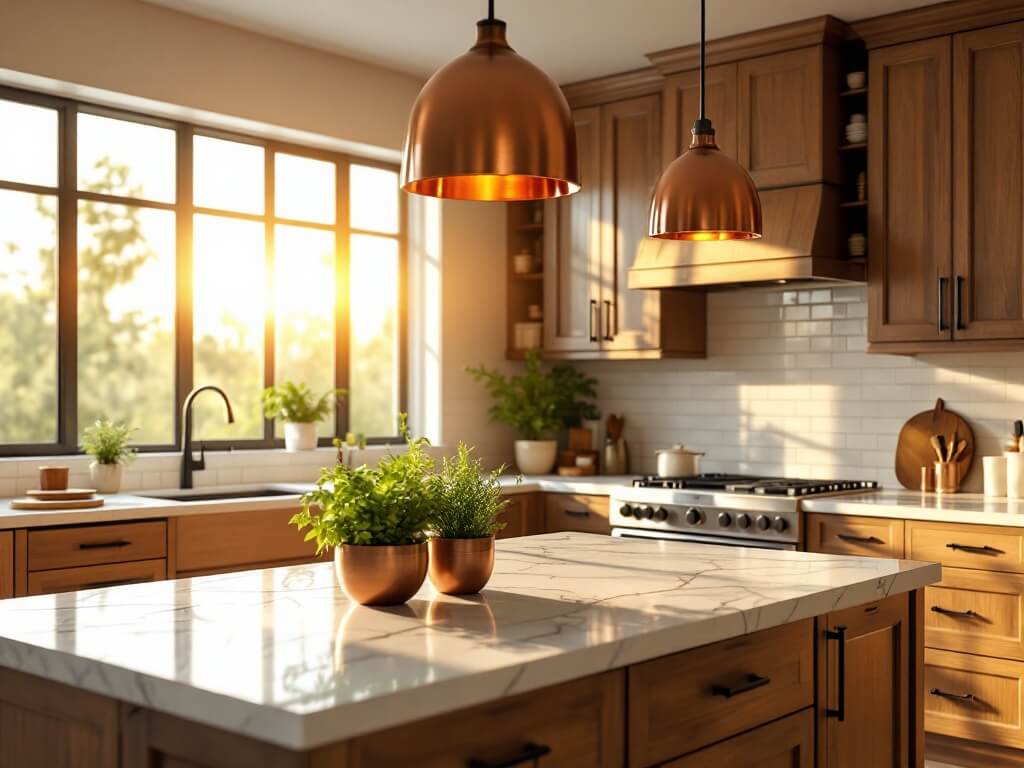
✎ Steal This Look
- Paint Color: Sherwin-Williams Rookwood Dark Red SW 2802
- Furniture: farmhouse-style kitchen island with distressed pine base and soapstone countertop
- Lighting: wrought iron pot rack with vintage Edison bulb pendants
- Materials: reclaimed barn wood ceiling beams, hand-scraped hickory flooring, hammered copper range hood, and soapstone countertops
There’s something deeply grounding about a cabin kitchen—it becomes the heart of every gathering, where the smell of coffee mingles with woodsmoke and stories unfold slowly.
Why Cabin Kitchens Are Having Their Moment
Let’s be honest – we’re all craving that warm, welcoming space that feels like a peaceful escape from our hectic lives.
Cabin kitchens aren’t just trendy – they’re timeless havens that combine functionality with cozy charm.
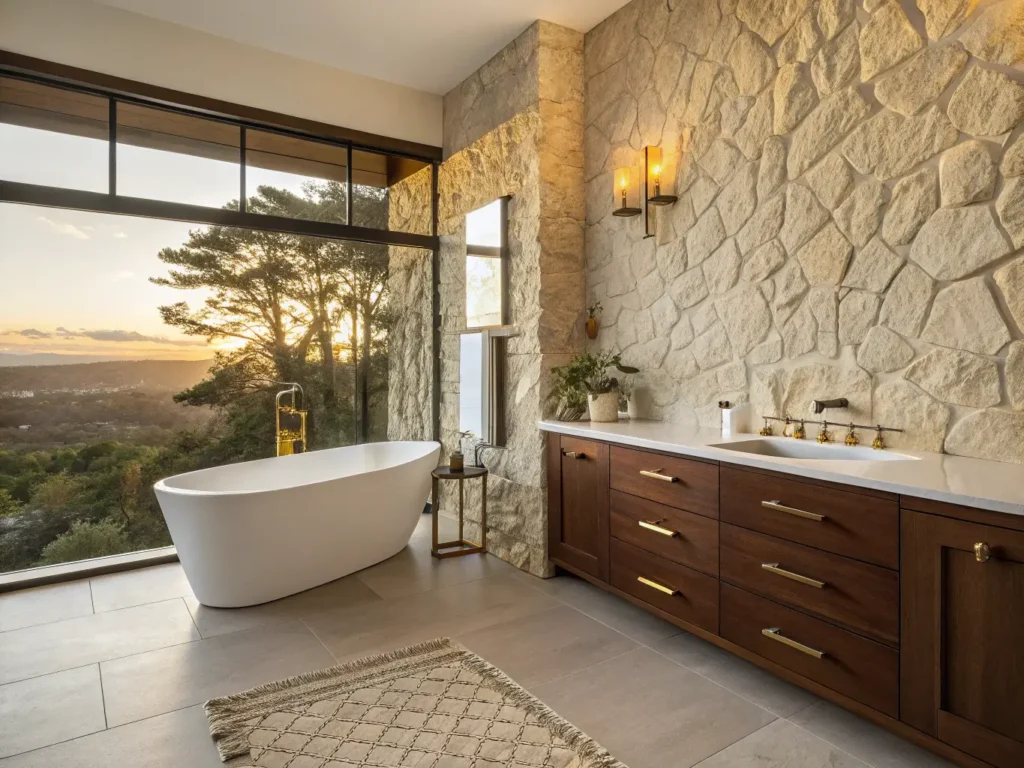
🏠 Steal This Look
- Paint Color: Benjamin Moore White Dove OC-17
- Furniture: reclaimed wood farmhouse dining table with bench seating
- Lighting: wrought iron chandelier with Edison bulbs and wooden beams
- Materials: rough-hewn cedar beams, hand-scraped wide plank flooring, hammered copper accents, natural stone backsplash
There’s something deeply restorative about walking into a kitchen that feels like it has hosted generations of slow mornings and unhurried conversations.
Essential Elements of a Cabin Kitchen
The Foundation
- Exposed wooden beams
- Natural stone elements
- Farmhouse sink
- Rustic hardware
- Open shelving
Materials That Matter
I always tell my clients to focus on these key materials:
- Reclaimed wood for character
- Slate or stone for durability
- Cast iron fixtures for authenticity
- Copper accents for warmth

✎ Steal This Look
- Paint Color: Farrow & Ball Mouse’s Back 40
- Furniture: hewn timber farmhouse dining table with bench seating
- Lighting: wrought iron chandelier with Edison bulbs
- Materials: reclaimed barn wood ceiling beams, hand-split stone backsplash, hammered copper range hood, cast iron bridge faucet
This is the heart where morning coffee tastes better and dinner prep becomes a ritual—every material choice should invite lingering, not just efficiency.
Budget-Friendly Transformation Tips
You don’t need a mountain of cash to create cabin charm. Here’s what I recommend:
Quick Wins Under $500:
- Paint existing cabinets in earth tones
- Add vintage hardware
- Install stick-on backsplash tiles
- Display rustic cooking tools
Mid-Range Improvements ($500-2000):
- Replace countertops with butcher block
- Install a farmhouse sink
- Add wooden open shelving
- Update lighting fixtures

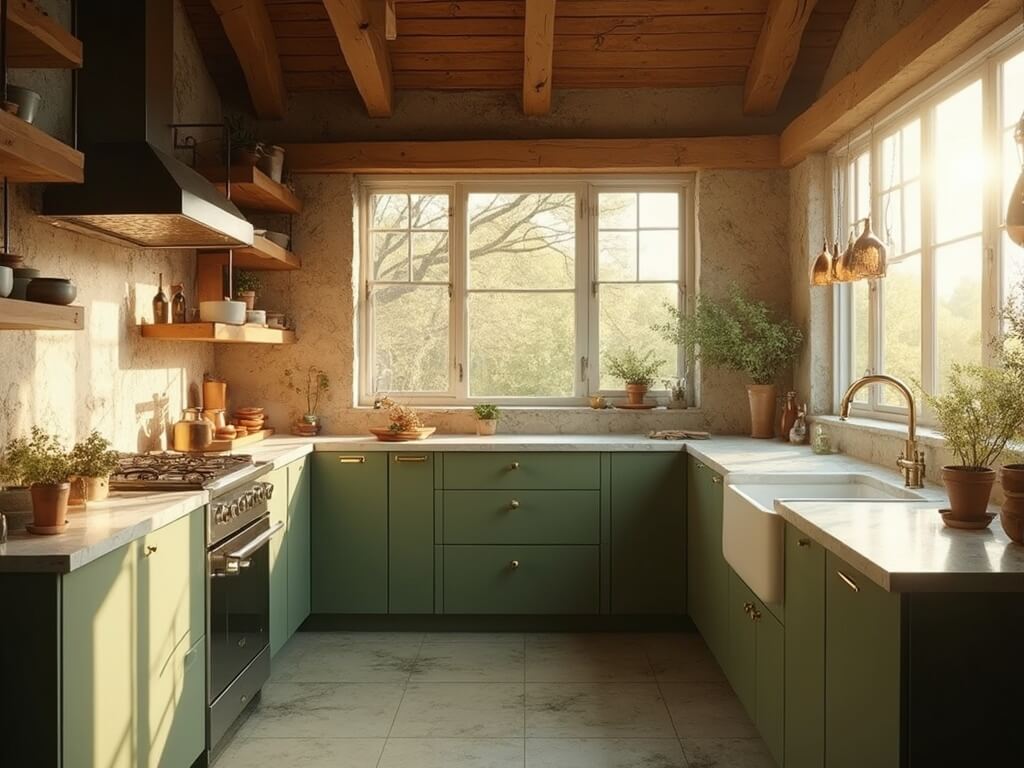
💡 Steal This Look
- Paint Color: Behr Burnished Clay N200-4
- Furniture: IKEA HAVSTA cabinet base painted in deep forest green with aged brass pulls
- Lighting: LNC A03321 3-light wood chandelier with rope-wrapped arms
- Materials: reclaimed barn wood floating shelves, matte black iron pipe brackets, honed soapstone-look laminate countertops, hand-forged cabinet pulls
My first cabin kitchen was a 1980s rental with orange oak cabinets I couldn’t replace, so I learned that strategic paint and hardware swaps deliver 80% of the visual impact for 20% of the cost—those weekends sanding and brushing still feel like the best investment I made in that space.
Styling Secrets
Here’s my foolproof formula for styling cabin kitchens:
Layer Textures
- Woven baskets
- Cast iron cookware
- Natural linens
- Wooden cutting boards
Add Organic Elements
- Potted herbs
- Pine branches
- Fresh produce displays
- Dried flowers
Create Focal Points
- Vintage copper pots
- Antique kitchen tools
- Statement lighting
- Large wooden island

🏠 Steal This Look
- Paint Color: use Valspar brand. Match the ACTUAL wall color in the image. Format: Valspar Cabin Plank 3009-10
- Furniture: reclaimed barn wood kitchen island with live edge countertop and black iron base
- Lighting: oversized wrought iron chandelier with Edison bulbs and wooden beam mounting
- Materials: hand-hewn pine beams, hammered copper backsplashes, raw linen cafe curtains, cast iron hardware
This is the heart of cabin living—where morning coffee tastes better and dinner prep becomes a ritual rather than a chore, surrounded by pieces that carry stories in their patina.
🌊 Get The Look
Seasonal Adaptations
I love changing these elements seasonally:
Summer:
- Fresh herbs
- Wildflowers
- Light linens
- Woven baskets
Fall:
- Dried corn husks
- Pumpkins
- Warm textiles
- Copper accents
Winter:
- Pine garlands
- Wool throws
- Candle displays
- Vintage sleds
Spring:
- Potted plants
- Light curtains
- Fresh flowers
- Pastel accents

🖼 Steal This Look
- Paint Color: PPG Stonehenge Greige PPG1003-4
- Furniture: reclaimed wood farmhouse table with bench seating
- Lighting: wrought iron pot rack with integrated downlights
- Materials: rough-hewn cedar beams, hand-forged iron hardware, distressed pine shelving, stone veneer backsplash
There’s something deeply grounding about this rhythm of change in a cabin kitchen—it reconnects you to the land outside your window and gives you permission to slow down, notice, and intentionally reset your space as the world turns.
Common Mistakes to Avoid
Trust me, I’ve seen these errors repeatedly:
- ❌ Overdoing the rustic elements
- ❌ Ignoring proper lighting
- ❌ Sacrificing function for style
- ❌ Using fake materials instead of authentic ones
- ❌ Cluttering open spaces
🏠 Steal This Look
- Paint Color: Dunn-Edwards Rustic Taupe DE6145
- Furniture: heirloom-quality hickory work table with live edge, not factory-distressed pine
- Lighting: hand-forged iron pendant with mica shade, sized proportionally to island length
- Materials: reclaimed barn wood with original patina, hand-hammered copper, waxed soapstone, vegetable-tanned leather pulls
I once walked into a cabin kitchen so overloaded with antler chandeliers, faux-fur throws, and ‘live laugh love’ signs in reclaimed wood that the owners couldn’t find their coffee maker—your kitchen should feel collected over decades, not decorated in a weekend.
Photography Tips for Cabin Kitchens
As someone who’s photographed countless cabin kitchens, here’s what works:
- Shoot during golden hour for warm light
- Capture details like hardware and textures
- Include lifestyle elements like steaming coffee
- Show the kitchen in use
- Focus on natural materials
🏠 Steal This Look
- Paint Color: use Clare Paint brand. Match the ACTUAL wall color in the image. Format: Clare Paint ColorName CODE
- Furniture: vintage pine harvest table with bench seating
- Lighting: wrought iron pot rack with integrated downlights
- Materials: hand-hewn beams, soapstone countertops, hammered copper backsplashes
There’s something deeply satisfying about capturing a cabin kitchen at 6 AM when the coffee’s brewing and the light hits those worn wooden surfaces just right—it’s the moment the room tells its true story.
Maintenance Magic
Keep your cabin kitchen looking pristine:
- Oil wooden surfaces monthly
- Clean copper with lemon and salt
- Dust open shelving weekly
- Polish hardware seasonally
- Reseal stone surfaces annually

🏠 Steal This Look
- Paint Color: use Fine Paints of Europe brand. Match the ACTUAL wall color in the image. Format: Fine Paints of Europe ColorName CODE
- Furniture: specific furniture for this room
- Lighting: specific lighting fixture
- Materials: key textures and materials
There’s something deeply satisfying about the ritual of caring for natural materials—monthly oiling becomes a meditation that connects you to the craftsmanship of your space.
Final Thoughts
Leave one pot on the stove and one mug in the sink and see if the room feels more inhabited. Cozy cabin kitchens succeed when the use is treated as decor. The best ones feel like kitchens where the mess is the story.